Overview
INTERCHANGE
Lisbon Exhibition
06/2026 – 09/2026
Curated by Manuel S.Mendonça
_______
FEATURED ARTISTS:
Ale de la Puente (Mexico)
Lukas Dworschak (Austria)
Patrícia Chamrazová (Slovakia)
Robertina Šebjanič (Slovenia)
Studio Above&Below (Germany & UK)
_______
Essay by Esther Hladik
Across five international positions, INTERCHANGE at Artemis Gallery Lisbon maps the increasingly osmotic relation between biological life and technology. Traversing abyssal imaginaries, mycelial networks, Neolithic inscriptions and the calibrated order of the laboratory, the exhibition traces environments shaped by recursive transformation: Cybernetic structures take on metabolic cadence, as organic matter edges toward the machinic. Coexistence, ecological precarity and material memory circulate across immersive projections, reactive interfaces, and spatial interventions. Scientific enquiry repeatedly dissolves into conjecture and sensory drift, blurring distinctions between observation, simulation and embodiment. Rather than framing recent technological developments — particularly the accelerated integration of AI into everyday life — as a rupture from established forms of human experience, INTERCHANGE examines parallels between computational operations and processes embedded within biological structures, from adaptive behaviour to feedback loops. What emerges is a shifting continuum between nature and technology, civilisational history and futurity, embodiment and virtuality.
Read More
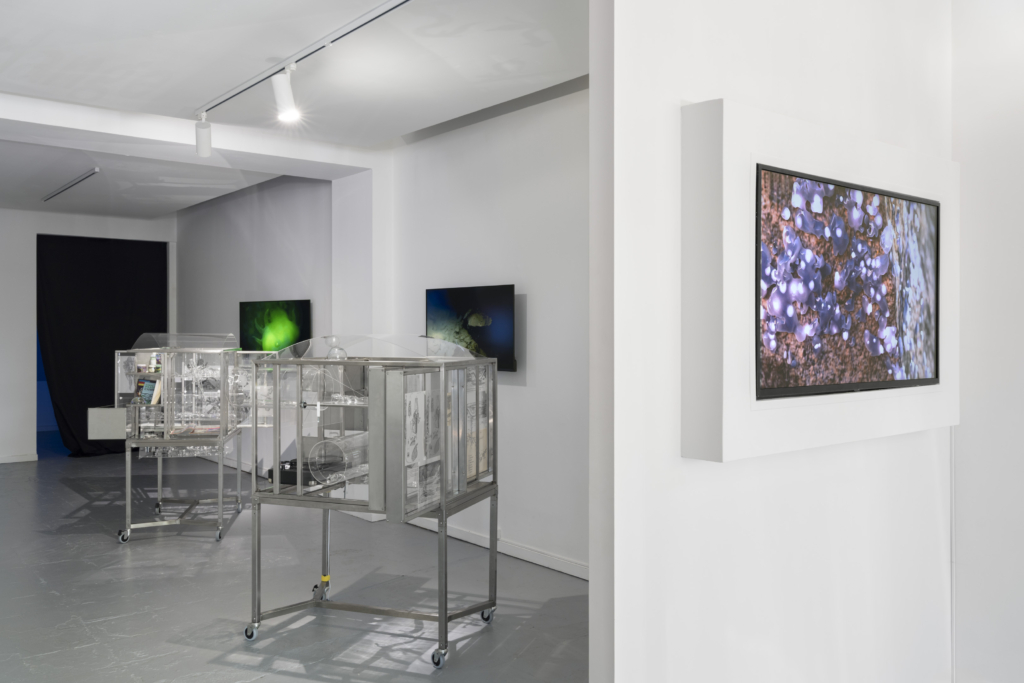
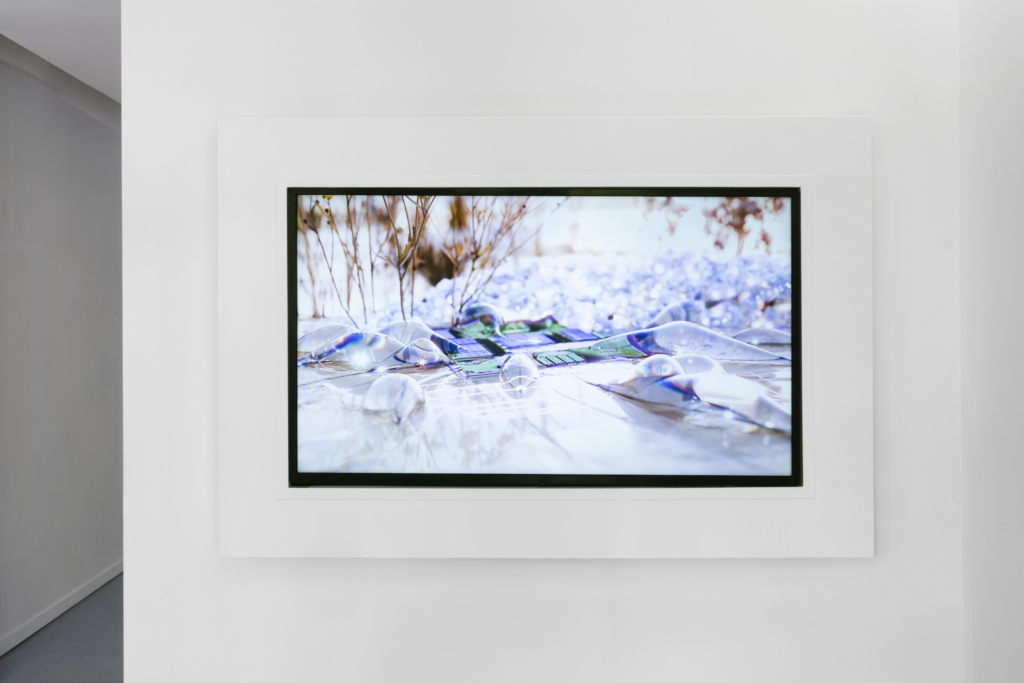
Patrícia Chamrazová’s Radical Connections – Beyond a Symbiotic Sensation (2024–2025) opens the exhibition through softly pulsating projections resembling fungal networks, neural pathways, or microscopic cellular formations viewed at impossible proximity. Chamrazová resists the rhetoric of techno-futurist spectacle in favour of something quieter and more diffuse: an atmosphere shaped by permeability and affective exchange. Drawing from microbiology and posthumanist thought, the Czech artist traces forms of relationality in which empathy exceeds the human subject, unfolding instead across fluid interactions between biology and digital configurations.
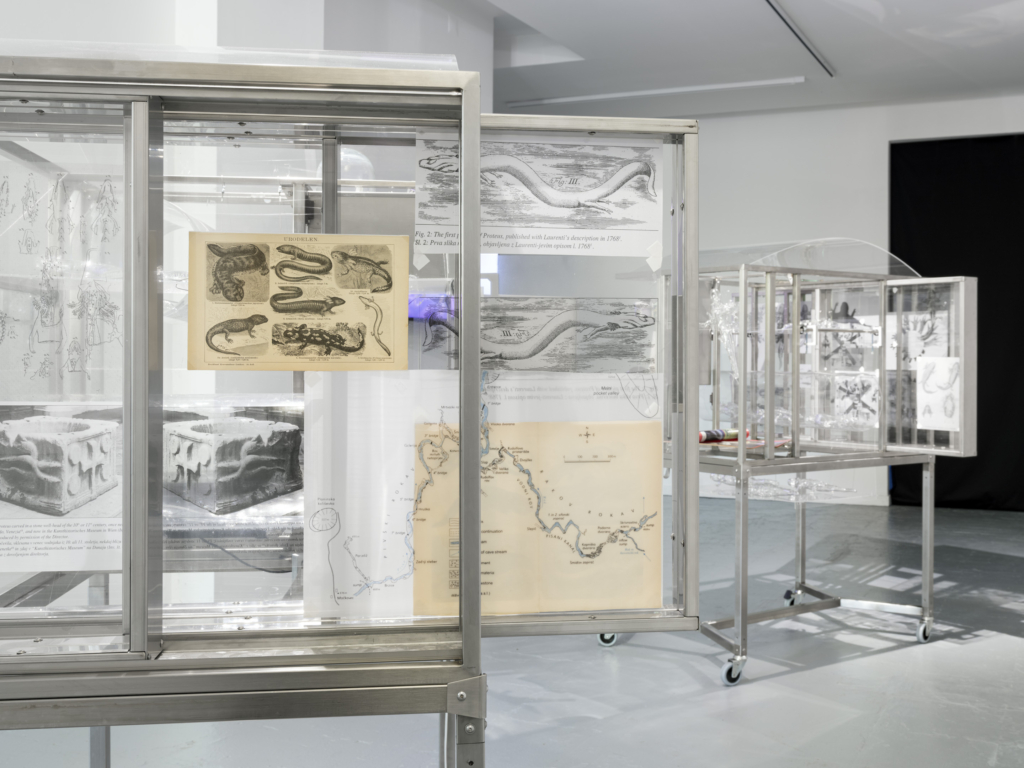
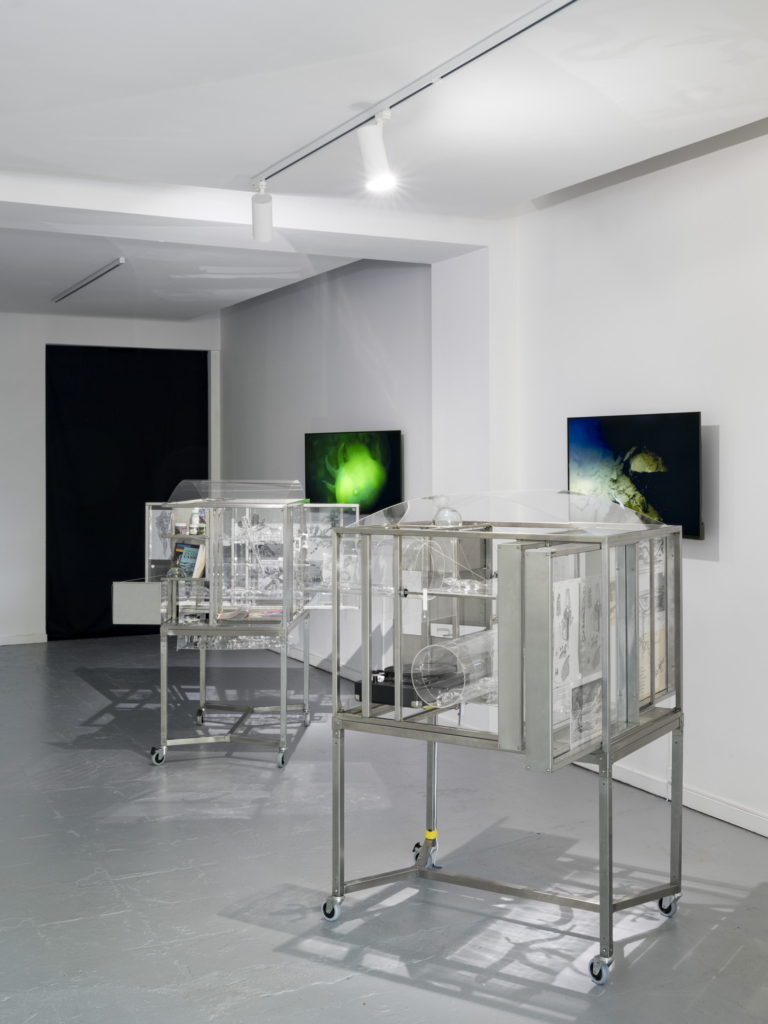
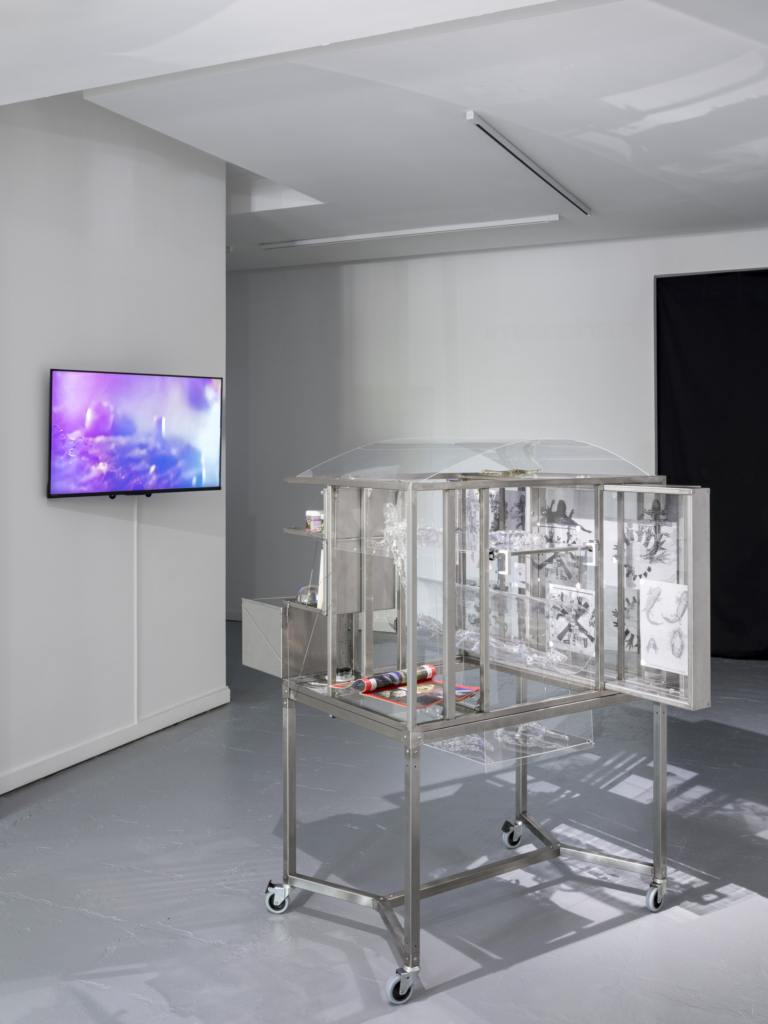
From Chamrazová’s speculative connections, attention turns towards the murky aquatic territories of Robertina Šebjanič’s Lygophilia series. Focusing on the Mexican axolotl and the Slovenian proteus – species marked by regenerative capacities and extreme environmental specialisation — the Slovenian artist assembles constellations of research materials, political anxiety, and symbolic projection. In Neotenous dark dwellers_Lygophilia (2018), vitrines resembling neonatal incubators contain combinations of video, sound, empirical references, and organic residue. Organisms and narratives begin to echo and distort one another, revealing both the vulnerability of collapsing ecosystems and humanity’s persistent urge to classify and regulate life itself.
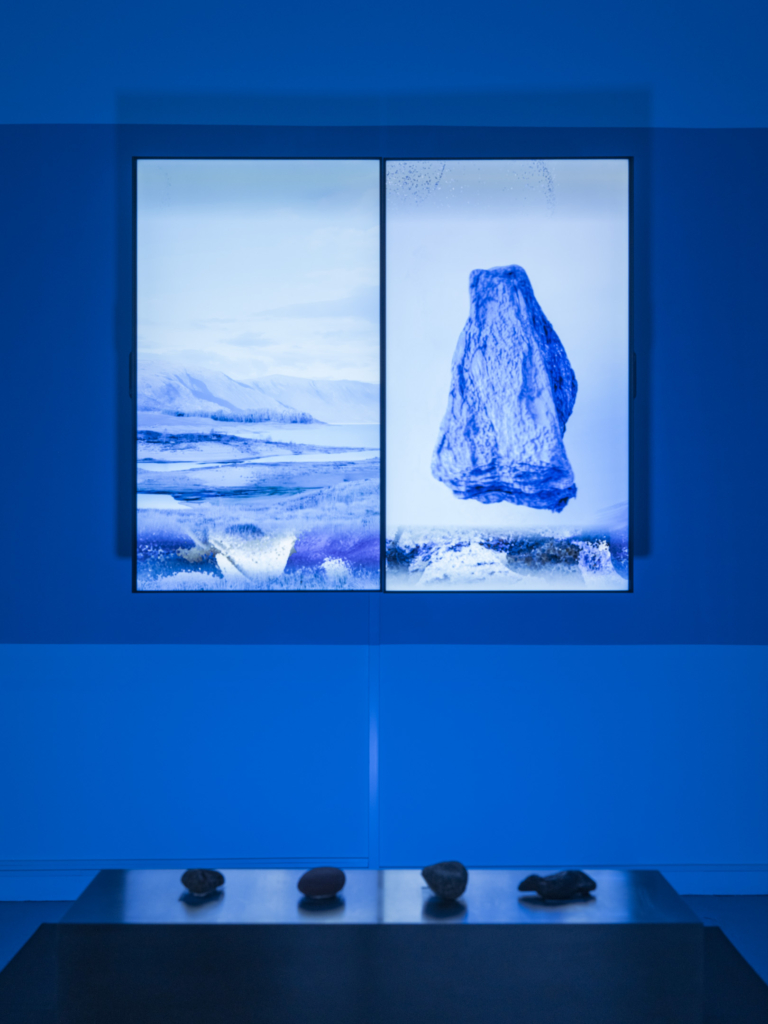
As Šebjanič dissolves the boundary between scientific observation and symbolic projection, (s)low Tech AI (2025) by Studio Above&Below considers how artificial intelligence absorbs, registers and reconfigures human presence. Founded in London by Daria Jelonek and Perry-James Sugden, with works presented internationally at institutions including Tate Modern and the Venice Biennale, Studio Above&Below approaches technology less as immaterial infrastructure than as a physical and sensory condition. Four stones operate as tactile interfaces through which visitors activate an evolving network of sonic and visual responses. Referencing prehistoric petroglyphs and Neolithic rock carvings in Scotland, the work situates machine intelligence within a much older human impulse: the desire to inscribe meaning into matter.
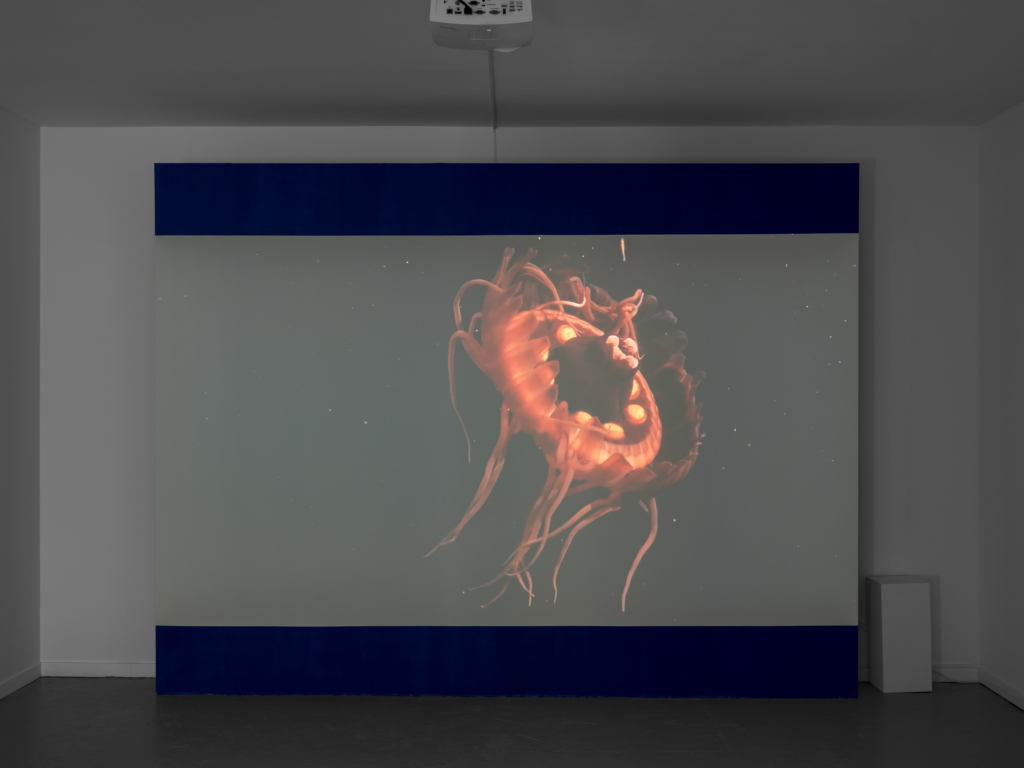
Perceptual disorientation takes hold in Ale de la Puente’s Nieve Marina (2023), developed during a residency aboard the research vessel RV Falkor. Descending four hundred metres below sea level, the Mexican artist’s HD projection dissolves the certainties of terrestrial space into submerged darkness animated by floating particles and flickering reflections. Informed by de la Puente’s engagement with industrial design, boat construction, and collaborations across astronomy, meteorology, and nuclear physics, the work drifts from observation into atmospheric instability. Together with Emilio Hinojosa Carrión’s synthetic soundscape, Nieve Marina becomes a hypnotic meditation on temporality and dimensions that continue to evade human cognition.
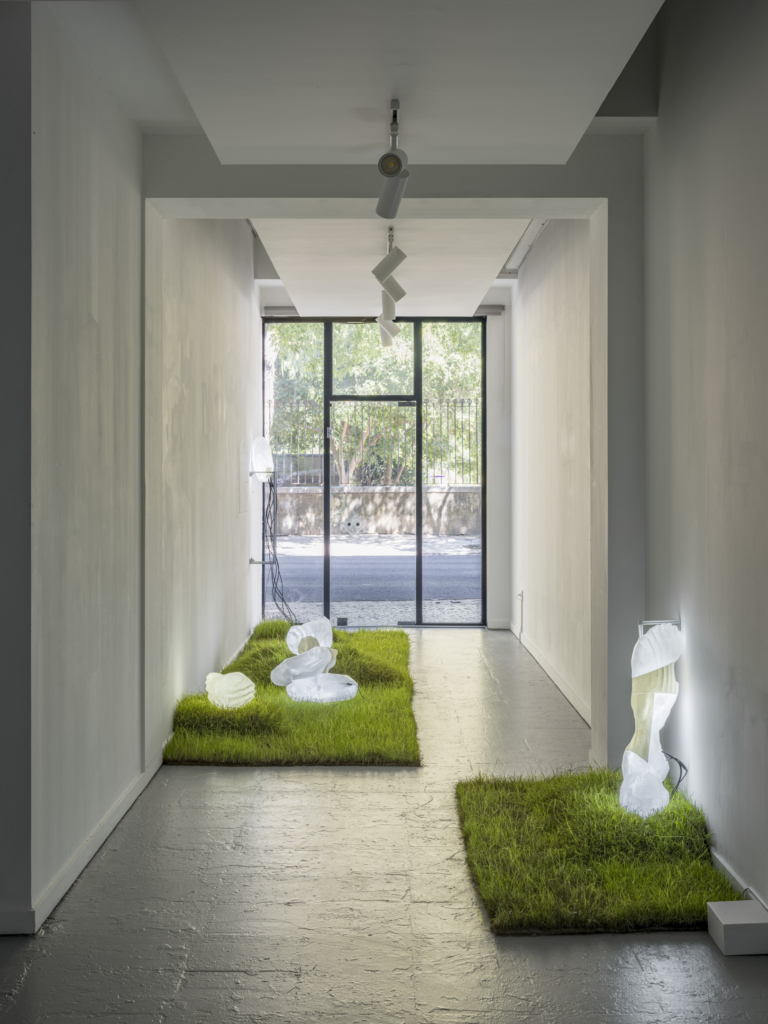
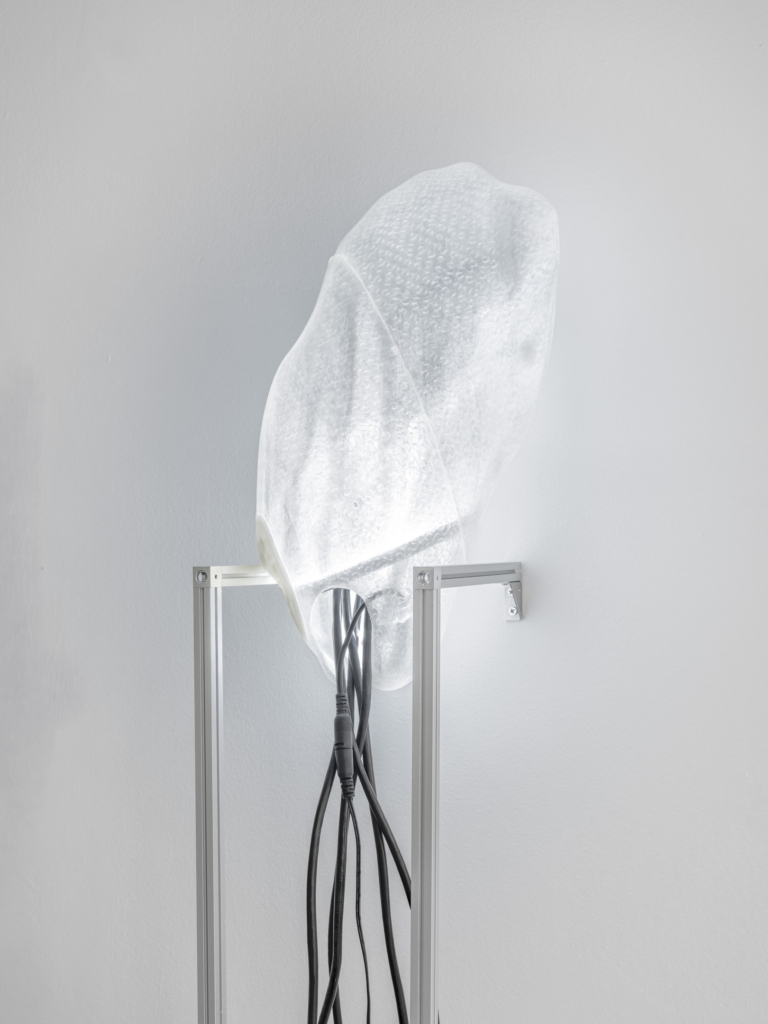
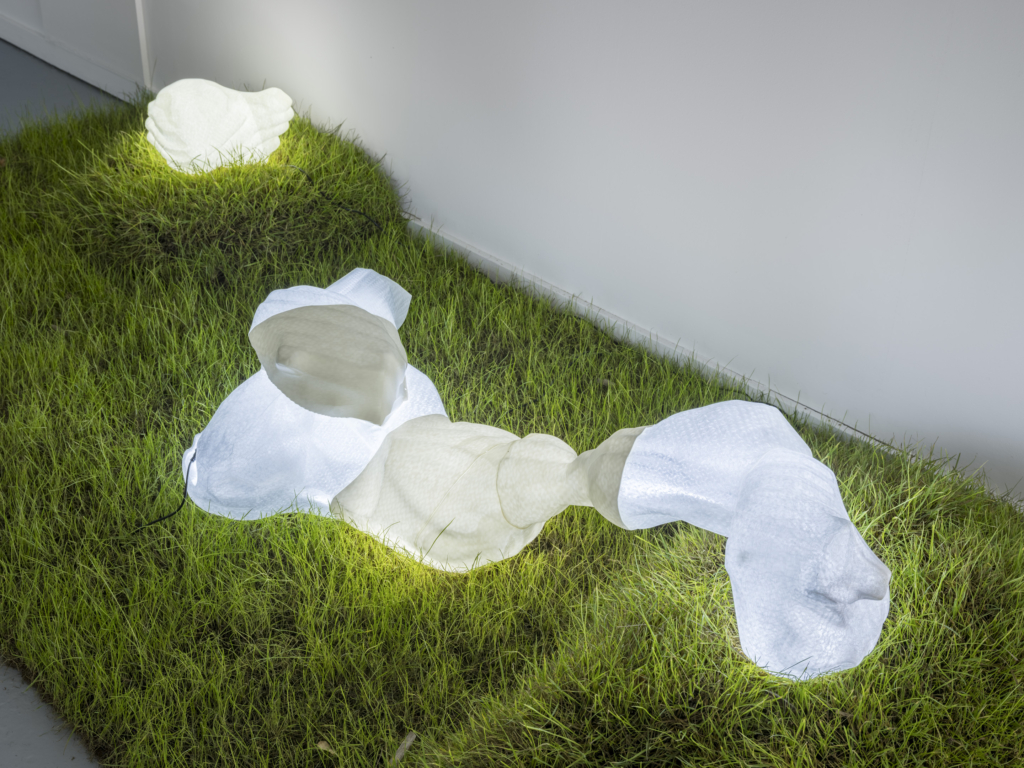
Questions surrounding the reciprocity between living and synthetic matter culminate in Lukas Dworschak’s Of Ridges and Ripples (2026). The Austrian artist transforms part of the gallery into a narrow corridor filled with damp grass, translucent luminous forms and black metal structures. Artificial light emitted from the amorphous objects ricochets through the space while simultaneously sustaining the vegetation beneath it. Part of Dworschak’s ongoing Embodiments series, the installation stages an interdependent relationship of computational fabrication and vegetal growth. Refusing any stable distinction between contingency and control, Of Ridges and Ripples unfolds as a posthuman terrain marked by open-ended adaptations.
_______