Overview
Quantum Leaps
06/03/2026 – 30/05/2026
Curated by Manuel S.Mendonça
_______
FEATURED ARTISTS:
Jan Poš (Czech Republic)
Johanna Arco (Austria)
kennedy+swan (Germany)
Studio Above&Below (Germany & UK)
T(n)C (Hungary & Austria)
_______
Essay by Simon Goritschnig
There is a saying that everything is a circle. While this seems true on one side, one might argue that it is rather circles within circles. Within these loops that define our cosmos, there is one that is of particular interest: It is the feedback loop of us, conscious entities, being in the world. What we experience is the base for our existence, and through our actions we can change it.
In quantum physics this is the reason why research is so complicated. While we are observing, we are changing the results. These can be paradoxical, but as long as they are predictable, science can use them. Thus, a true experiment has to happen under special conditions. While the lab experiment relies on sterility, objectivity and repeatability, the human mind is more flexible.
The topic of observation is a crucial factor in the experiments of Jan Poš. In his work, speculative science is strongly entwined with artistic poetry. In his piece “Waiting for” the role of the observer is reflected metaphorically and physically. As we are confronted with the surreal circumstances of a virtual laboratory, we ourselves start deciphering and analysing the unknown other.
Read More
“Archaeology here does not turn toward the past; it becomes a speculative method for reading traces of the future.” – Jan Poš
Our understanding of the present gets shaped by our vision of tomorrow. The future is written into the now, because we constantly deal with it… like a formula with an unknown variable, the future and its predictions follow us around and define our actions. This is not just poetry of everyday life – it is connected with the human’s ability to make plans, fantasise and wish for better times. Without imagination, there is no future.
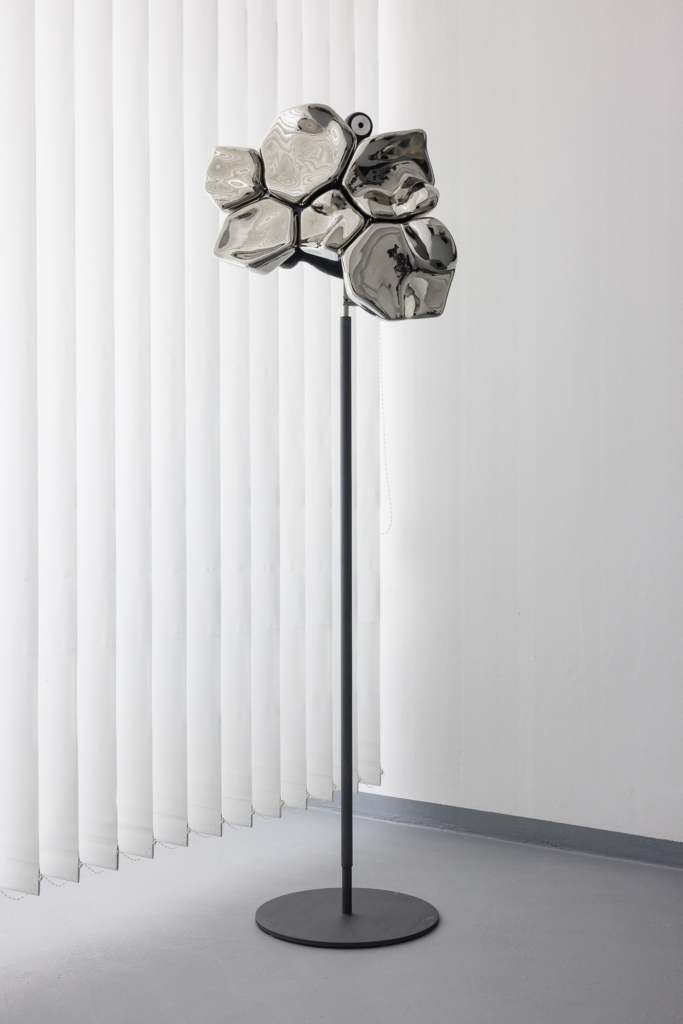
Jan Poš’ work confronts the viewer with something, that we cannot categorise. The task of not trying to understand sounds indeed easier than it is. As a merging between digital rendering and visual imagination, the object holds back its true nature and only speaks to us through the riddle of light: The only thing I’m not is what you see in my reflection. This is what art does to us: it serves as a mirror for our projection; we always see ourselves in it.
Also Johanna Arco’s work explores the boundaries of perception by letting the viewer explore a space that does not exist anymore. Reality is not imagined, it is rather translated.
“I don’t know what the house wants” is an interactive art game t Johanna Arco hat aims to unlock the memories that have been stored within a building. The project is a gesture of farewell.” – Johanna Arco
The glitches and inconsistencies in this collection are not disturbing our experience, they are opening it up. Through navigating the realms of an object’s memory we learn that fragmentation does not always equal destruction. This is the beauty poetry of reading between lines: we deal with these gaps naturally, as we fill them on the go… with our own memories.
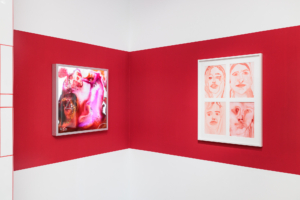
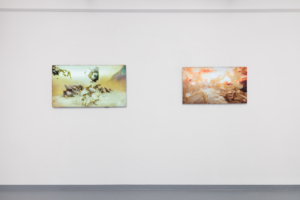
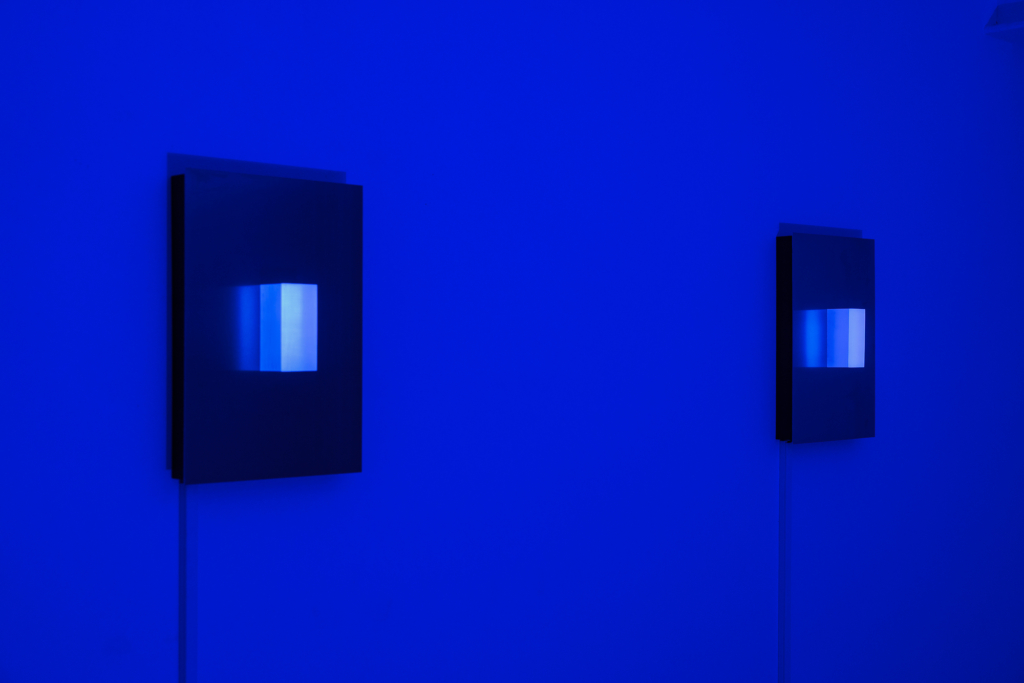
A similar yet substantially different approach can be seen in the multilayered light boxes by artist duo T(n)C. Through the permeable surface of dissected screens we get glimpses of uncanny constructions, lost entities floating in the void between life and death. It seems their laboratory exists in this other realm, covered by the digital mist and mountains of sand, that sweep over the edges of glowing petri dishes.
Agnes Varnai and Tina Kult, exploring together the fictional landscapes of dystopian beach scenes, manifest their vision of an ambiguous reality through 3D-scanned staged environments. Their archives are not built from memory, but from fairytale walks through dystopian mind-worlds.
Boundless universes, filled with the scattered remains of polygon agglomerations, confront us with the insight that reality is only a representation of what we believe to be true. A shared concept at best. Whether its entities are inorganic spectators or conscious entities remains to be seen – another puzzle we might never wrap our heads around.
“Pierced by four screws and stripped of their plastic casings, defiant, parasitic visions radiate from the screens. (…) The series (…) illuminates society’s ambivalent relationship to idyllic places and reflects on what remains after humanity. The luminous images capture both the desire for paradisiacal landscapes and the m arks consumption leaves on them and us.” – Studio T(n)C
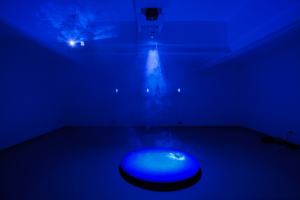
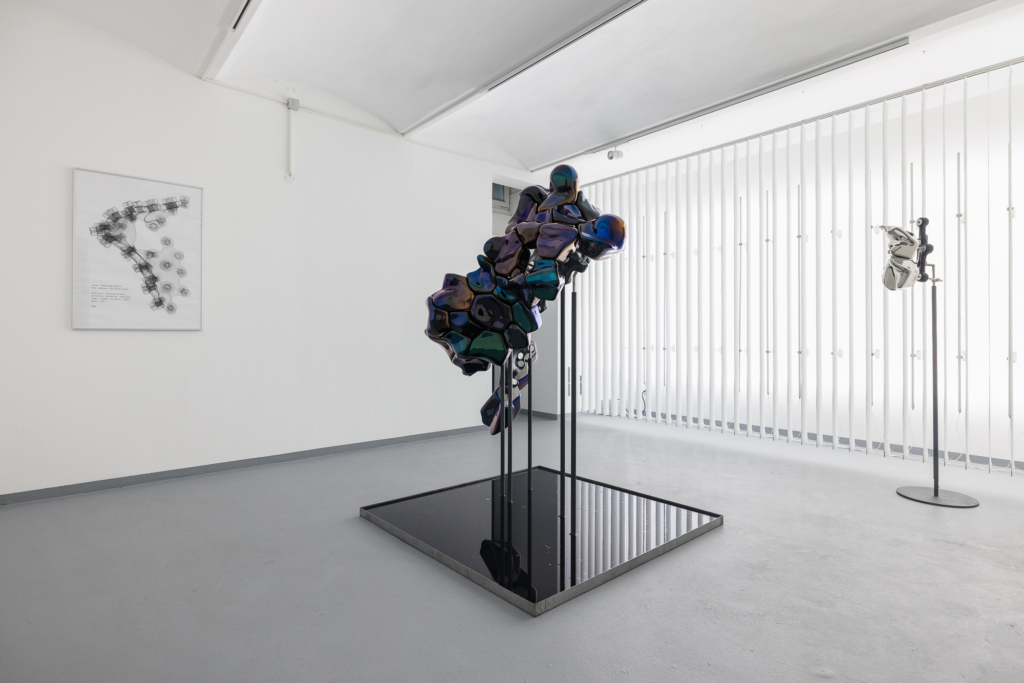
As long as the mind understands the input it is given, it is quite happy to adapt. But when confronted with a reality that is unclear, ambiguous or paradoxical, the algorithm starts to falter. With their living sculpture “Quantum”, the artists from STUDIO ABOVE&BELOW remind us, that the mind is a curious thing, in the most literal way.
“The live sculpture embodies multiple potential patterns simultaneously (…) traces of possibility that once appeared and will never return in the same way.” – STUDIO ABOVE&BELOW
Quantum physics has eluded the mind for a century now, and although mathematics, physics and machines have proven its reliability, the mind still refuses to accept these results. Again it is the dancing of particles, that mesmerise and invite to go deeper. With the humming of light, that hypnotises, we are absorbed into open-eyed meditation.
It is difficult to believe in a truth that is manifold. Although, what we see is real it undermines our understanding of reality. Yet the mind has to work with the input it is given and so it subsumes: Magic, wonder, miracles! This is the stuff that true adventures are made of: stepping out into the unknown, the other, the void.
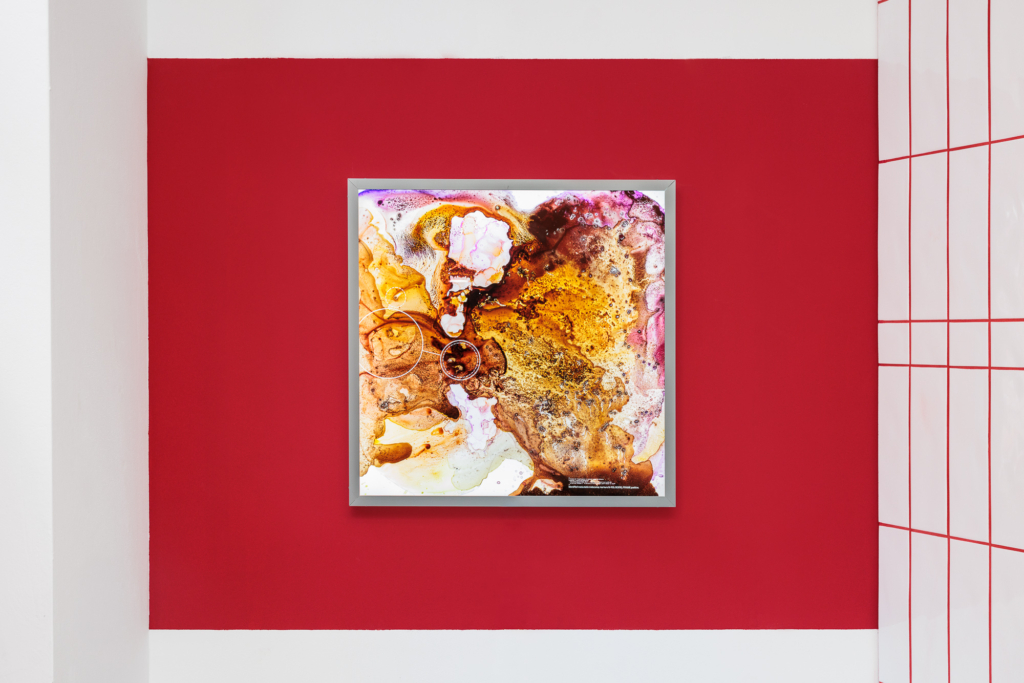
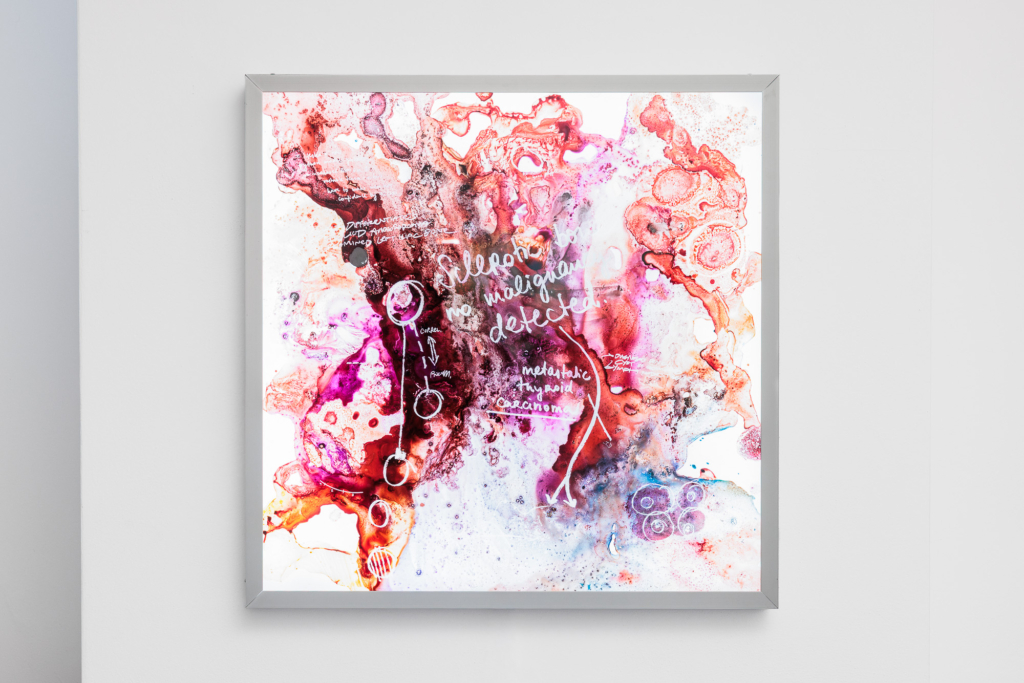
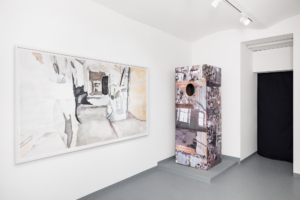
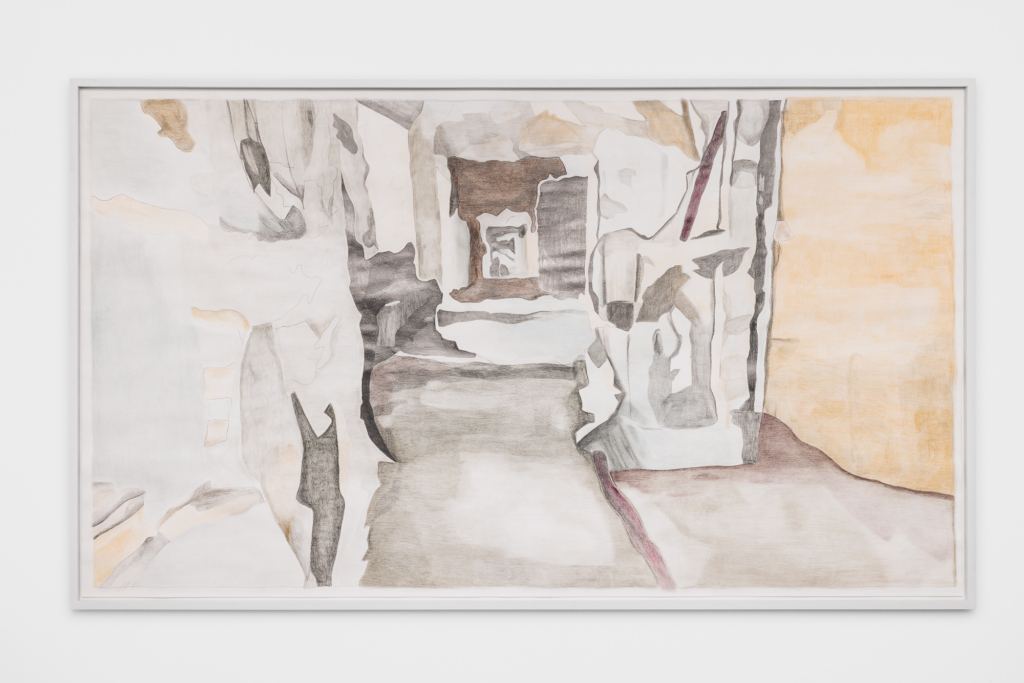
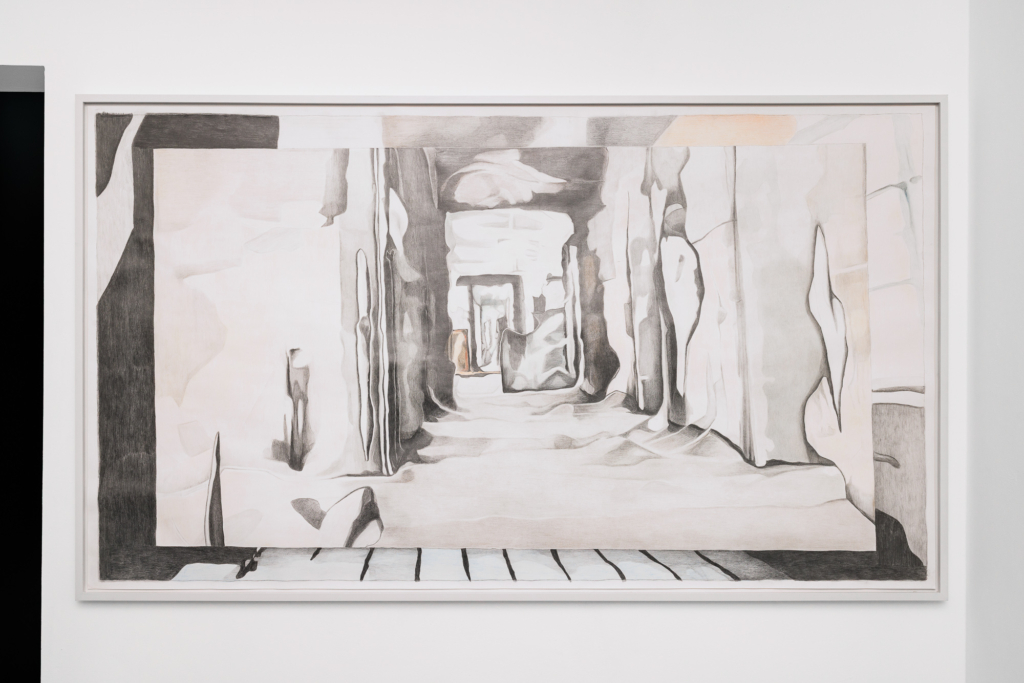
In the work of STUDIO KENNEDY+SWAN paradoxes and ambiguous states play a major role as well. Using watercolours to expose errors in AI disease diagnosis, they bridge the gap between the analog and digital effortlessly. In an act of researching research, art serves as a tool to expose the boundaries of consciousness, like a Turing test under special conditions.
“What does it mean to open up the body to algorithmic systems?” – STUDIO KENNEDY+SWAN
It is in the bifold state of unclarity where the magic happens: For a short moment paintings of lungs become real, pigment turns into blood and portraits turn into people. In the liminal zone between cognitive states, the virtual replaces reality altogether. Kennedy+Swan’s work “The Red Queen Effect” circles around this topic and puts an important question to the test: Technology is the dream that life could change for the better, but how can we make it work? It is a narrow path that seems to be most promising: using new technology to broaden our understanding of the world without losing ourselves in it.
With QUANTUM LEAPS curator Manuel Mendonça reflects on the boundaries of human consciousness as well as on the quality of the human experience.
By combining works that not only question their own medium but the role of the observer, the show really points out, that the fabric of shared reality is thinly woven. Ultimately this common denominator is what holds art and science together like nothing else: we seek understanding to synthesize meaning… to make our understanding of the world a bit more precise.
The miracle, although we almost never talk about it, is still this: We, conscious organisms, self-reflective, self-aware, strive on this planet in search of understanding. We seek connection with our surroundings, with ourselves and with others. And sometimes we succeed.
“Resonance is the quiet truth that everything vibrates and that certain frequencies naturally align. Entanglement reminds us that connection is not created; it is revealed. In our material reality, these two ideas merge: when we tune our inner vibration, we don’t force the world to change; we simply harmonize with what already belongs to us.” – Manuel Mendonça
The more we learn about the universe, the more it becomes clear: the blueprint of the cosmos shows itself in every part of it. We not only rhyme with the universe, we are the universe. We do not vibrate with it, we are the vibration.
_______